Phase I Clinical Trials and Advanced Therapies in Spain: Insights from the Qube Workshop
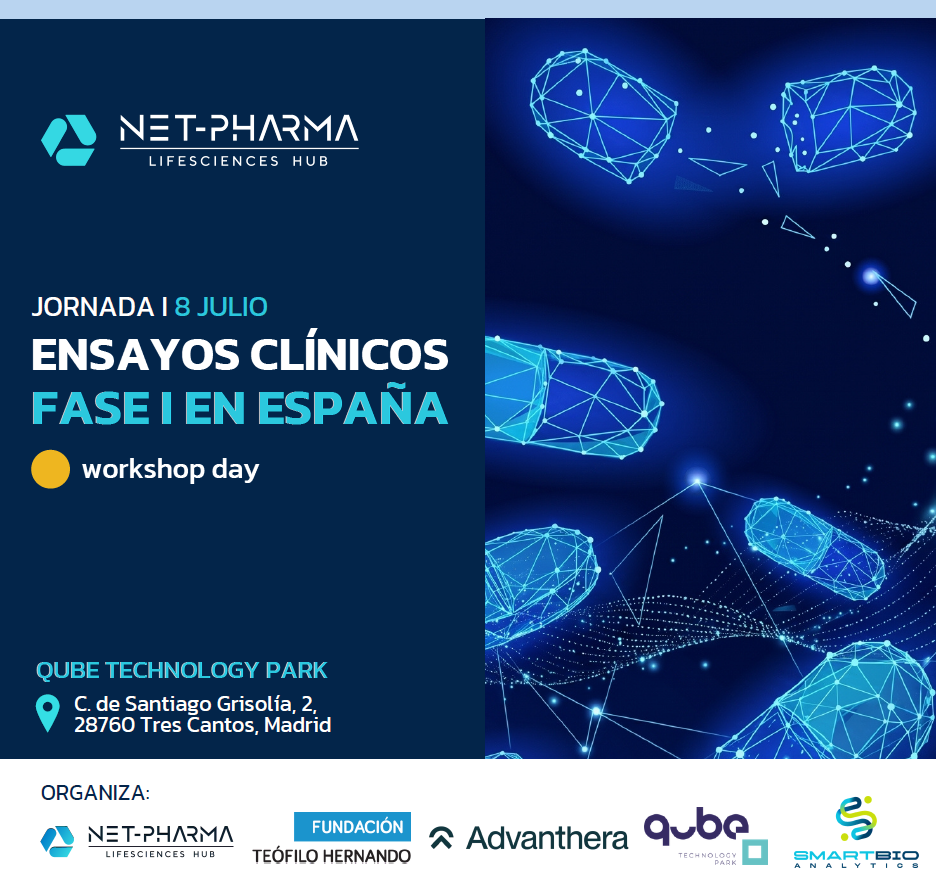
On 8 July, Qube Technology Park in Tres Cantos, Madrid, hosted a workshop dedicated to Phase I clinical trials in Spain, bringing together specialists from clinical research units, hospitals, CROs, regulatory consulting, patient-oriented research organisations and bioanalytical laboratories.
The event, organised by Net-Pharma Hub, Fundación Teófilo Hernando and Advanthera, provided an excellent opportunity to discuss the scientific, operational and regulatory challenges involved in first-in-human studies and advanced therapy clinical development.
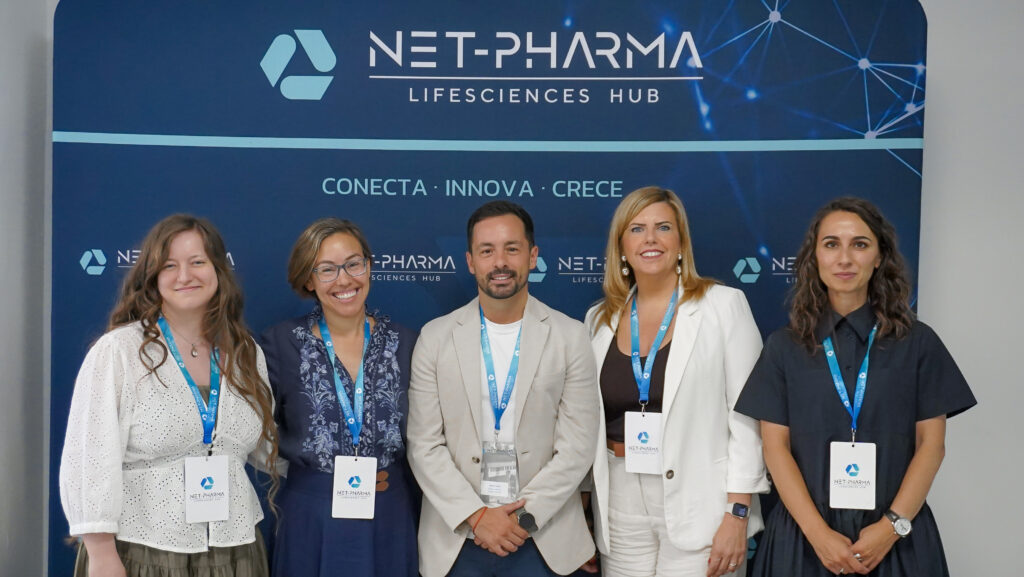
SmartBio Analytics participated in the round table on clinical trials for advanced therapy medicinal products, contributing the perspective of a specialised bioanalytical CRO supporting preclinical and clinical development.
A multidisciplinary view of first-in-human clinical trials
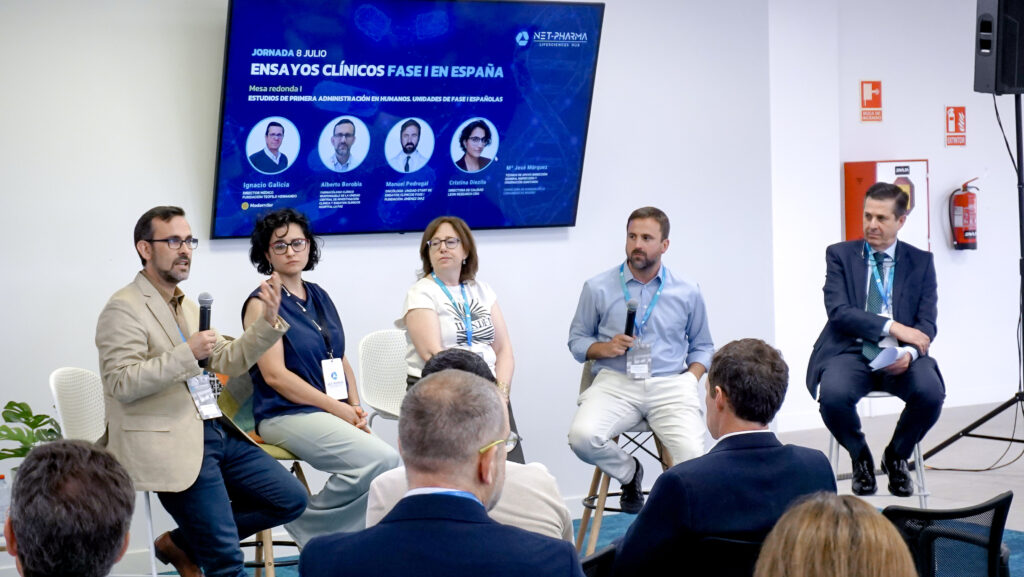
The first round table focused on first administration in humans and the role of Spanish Phase I clinical trial units.
The panel addressed several of the factors required to conduct a Phase I clinical trial successfully, including appropriate study design, operational preparation, quality systems, patient safety and coordination between sponsors, hospitals, clinical units, laboratories and regulatory professionals.
First-in-human studies represent a critical transition from non-clinical development to clinical evaluation. At this stage, reliable pharmacokinetic, safety, tolerability and biomarker data are essential for understanding how a new therapeutic candidate behaves in humans.
This is also where a qualified clinical bioanalysis partner becomes especially important. Robust and sensitive bioanalytical methods are required to generate dependable concentration data and support dose escalation, exposure assessment and pharmacokinetic interpretation.
Advanced therapies require a 360-degree development strategy
The second round table focused on clinical trials in advanced therapies and the need for a 360-degree development approach.
The session was moderated by Carolina Egea, Business Development Director at Advanthera, and included:
The discussion combined scientific, regulatory, clinical, operational and bioanalytical perspectives.
One of the main conclusions was clear: advanced therapies are evolving extremely rapidly, and the development framework surrounding them must continuously adapt to their scientific and technological complexity.
Developers of cell therapies, gene therapies and other advanced therapy medicinal products, or ATMPs, therefore need experienced partners capable of anticipating challenges throughout the entire development process.
These partners may include regulatory consultants, clinical CROs, CDMOs, hospital units, specialist laboratories and GLP bioanalytical CROs.
Why bioanalysis is especially challenging for advanced therapies
The bioanalytical strategy for an advanced therapy can be significantly more complex than the strategy used for a conventional small molecule.
For a traditional pharmaceutical compound, the main bioanalytical objective is often the quantification of the active substance or its metabolites in biological matrices through validated LC-MS/MS bioanalysis.
Biological medicines may additionally require ligand-binding assays, pharmacodynamic biomarker analysis and immunogenicity testing.
Advanced therapies can require an even broader range of analytical assessments, including:
Vector genome quantification.
Transgene detection and expression analysis.
Cellular persistence and expansion.
Biodistribution studies.
Shedding studies.
Pharmacokinetic or cellular kinetic assessments.
Immunogenicity testing.
Biomarker analysis.
Detection of replication-competent viral particles, when applicable.
Evaluation of biological activity and treatment persistence.
The exact analytical programme depends on the therapeutic platform, route of administration, biological mechanism and associated safety risks.
This means that the bioanalytical plan should be considered early in development rather than shortly before the beginning of the clinical trial.
GLP bioanalysis and GMP testing serve different purposes
Another important aspect of advanced therapy development is understanding the distinction between GLP bioanalysis and GMP analytical testing.
GMP testing is primarily focused on the manufacture and quality control of the medicinal product. It may include identity, purity, potency, sterility, stability and release testing.
GLP-regulated bioanalysis, by contrast, is generally focused on the reliable analysis of biological samples generated during non-clinical safety studies. These data may support pharmacokinetic, toxicokinetic, biodistribution or shedding assessments.
During clinical development, bioanalytical work must also follow an appropriate regulated quality framework, with validated methods, traceable records, controlled procedures and reliable data review.
Selecting a laboratory with experience in regulated bioanalysis helps ensure that analytical methods are fit for purpose and that the resulting data can withstand regulatory scrutiny.
Bioanalytical method development for Phase I clinical trials
Before analysing clinical samples, the bioanalytical method must be developed and validated according to its intended use.
For conventional pharmacokinetic studies, this commonly involves validating parameters such as:
Selectivity.
Sensitivity.
Calibration model.
Accuracy.
Precision.
Recovery.
Matrix effects.
Stability.
Dilution integrity.
Carry-over.
For small molecules and many peptides, these studies are commonly performed using LC-MS/MS bioanalytical methods aligned with ICH M10 principles.
For advanced therapies, however, standard validation guidance does not always cover every possible analytical platform or biological endpoint.
Methods based on qPCR, ddPCR, flow cytometry, ligand-binding assays or cell-based analytical technologies may therefore require a more tailored, risk-based and fit-for-purpose validation strategy.
The method should still demonstrate that it can reliably answer the scientific and regulatory question for which it was designed.
The role of qPCR and ddPCR in ATMP bioanalysis
Molecular techniques are becoming increasingly important in gene therapy bioanalysis and cell therapy bioanalysis.
Quantitative PCR and digital droplet PCR can be used to assess:
Vector copy number.
Transgene presence.
Biodistribution across tissues.
Persistence in blood or target organs.
Shedding into excreta or secretions.
Genetically modified cell persistence.
Low-level nucleic acid detection.
ddPCR can be particularly useful when absolute quantification, high sensitivity or improved tolerance to amplification variability is required.
Nevertheless, the suitability of qPCR or ddPCR must be evaluated for each project. Sample type, nucleic acid extraction, target sequence, expected concentration range and biological matrix can all significantly influence assay performance.
Biodistribution and shedding studies
Biodistribution studies assess where a therapeutic vector, genetically modified cell population or associated genetic material is detected after administration.
These studies are particularly relevant when a treatment may distribute beyond its intended target tissue or persist for an extended period.
Shedding studies evaluate whether viral or genetically modified material is released from the treated subject through biological materials such as urine, faeces, saliva, respiratory secretions or other excreta.
A positive molecular signal does not necessarily demonstrate the presence of viable or infectious material. Depending on the detected signal and the associated risk, additional characterisation may be necessary.
For this reason, the bioanalytical strategy must be closely connected to the biological characteristics of the therapy and to the overall non-clinical and clinical risk assessment.
Spain as a leading environment for clinical development
Another shared conclusion from the workshop was the strong position of Spain as a location for clinical research and advanced therapy development.
Spain combines experienced hospitals, specialised Phase I units, academic research groups, biotechnology companies, clinical CROs, regulatory experts, CDMOs and bioanalytical laboratories.
This collaborative ecosystem is particularly valuable for advanced therapies, where no single organisation can normally cover the full scientific, manufacturing, analytical, regulatory and clinical pathway independently.
Strong coordination between all stakeholders can reduce development risks, identify analytical requirements earlier and improve the transition from preclinical research to first-in-human clinical trials.
How SmartBio Analytics supports clinical and advanced therapy programmes
SmartBio Analytics is a specialised bioanalytical CRO in Spain providing regulated bioanalytical support for pharmaceutical, biotechnology and academic research programmes.
Our services include:
Development and validation of bioanalytical methods.
GLP bioanalysis for non-clinical studies.
Bioanalysis of Phase I and later-stage clinical trials.
Pharmacokinetic and toxicokinetic sample analysis.
LC-MS/MS bioanalysis for small molecules, peptides and biomarkers.
Biodistribution and shedding assay development.
qPCR and ddPCR-based analytical strategies.
Biomarker quantification.
Immunogenicity-related analytical support.
Tissue distribution and biological matrix analysis.
Scientific and regulatory support for bioanalytical study design.
By involving the bioanalytical laboratory early, sponsors can establish realistic sensitivity requirements, define suitable biological matrices, optimise sampling schedules and reduce the risk of encountering analytical limitations after a study has already started.
Frequently asked questions
What is the role of bioanalysis in a Phase I clinical trial?
Bioanalysis generates quantitative data on drug exposure, pharmacokinetics, biomarkers, immunogenicity and other biological endpoints. These data help researchers assess dose-response relationships, safety and the behaviour of a treatment in humans.
What does a bioanalytical CRO do?
A bioanalytical CRO develops, validates and applies analytical methods to measure drugs, metabolites, biomarkers, antibodies, nucleic acids or other biological targets in samples collected during preclinical or clinical studies.
When is GLP bioanalysis required?
GLP bioanalysis is typically required when biological samples from regulated non-clinical safety studies are analysed to support toxicokinetic, pharmacokinetic, biodistribution or other regulatory endpoints.
What analytical techniques are used for advanced therapies?
Depending on the therapeutic product, analytical techniques may include qPCR, ddPCR, flow cytometry, ligand-binding assays, LC-MS/MS, cell-based assays and immunogenicity assays.
Why should bioanalytical planning begin early?
Early planning allows the sponsor to define the correct samples, collection times, sensitivity requirements, storage conditions and validation strategy before the study begins. This reduces operational and regulatory risk.
Building the future of advanced therapy development
Advanced therapies have the potential to transform the treatment of diseases for which current therapeutic options remain limited.
Achieving that potential will require close collaboration between researchers, sponsors, clinical units, regulators, patients, CROs, CDMOs and specialised bioanalytical laboratories.
The Qube workshop highlighted both the complexity of this field and the strength of the clinical research ecosystem available in Spain.
At SmartBio Analytics, we are proud to contribute our expertise in regulated bioanalysis, GLP bioanalytical studies and advanced analytical technologies to help innovative therapies progress from preclinical development to the clinic.
Planing a Phase I clinical trial or an advanced therapy development programme?